Press Coverage
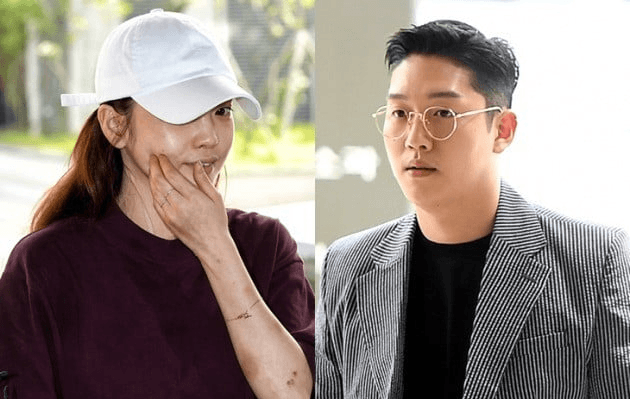
Seoul Central District Court Appeals Trial 2020. 7. 2. Ruling | Law Firm Jonjae, Managing Attorney Noh Jong-eon
Hello. This is Law Firm Jonjae.
On July 2, 2020, the second trial of Mr. Choi Jong-beom, who was indicted on charges including assaulting and threatening the late Ms. Goo Hara and violating the Act on Special Cases Concerning the Punishment, etc. of Sexual Crimes, was held. Attorney Noh Jong-eon, Managing Attorney of Law Firm Jonjae, attended the trial as a lawyer for the bereaved family together with Mr. Goo Ho-in, the late Ms. Goo Hara's older brother.
1. Appellate court sentences one year in prison and orders immediate detention
The Criminal Appeals Division 1-1 of the Seoul Central District Court (Chief Judges Kim Jae-young, Song Hye-young, and Jo Joong-rae) sentenced Mr. Choi Jong-beom, who had received a three-year suspended sentence and one year and six months in prison at the first trial, to one year in prison and ordered his immediate detention.
The court found that the defendant knew, as the late Ms. Goo Hara was a famous celebrity, that the harm expected if the sexual video were leaked would be extremely serious, and that he instead abused that fact to threaten her, which made the nature of the crime particularly bad.
However, on the charge of violating the Act on Special Cases Concerning the Punishment, etc. of Sexual Crimes (illegal filming using a camera, etc.), the court, as in the first trial, found him not guilty. The reason was that the crime was not proven to the extent that there was no reasonable doubt sufficient to overturn the original judgment.
2. Position of the bereaved family — rebuttal to the acquittal on illegal filming
Attorney Noh Jong-eon, representing the bereaved family, stated the following position.
① The fact that they were in a romantic relationship cannot be grounds for acquittal. The original trial referred to the fact that the victim and the defendant were lovers, but even in a romantic relationship, if the filming was done against the victim's will, that act is plainly a crime.
② Not stopping the filming does not mean consent. The original trial held that the victim heard the sound of the photo being taken but did not stop it. However, the victim consistently testified during the trial that she did not consent to the filming.
③ The fact that the photos were not deleted cannot amount to 'implied consent.' The victim clearly explained that because the photos were stored on the defendant's mobile phone, it was difficult to delete them immediately, and that she intended to delete them later out of concern that the romantic relationship would deteriorate.
In camera-based illegal filming offenses under the Sexual Crimes Punishment Act, the most important consideration is the victim's intent regarding the subject of the filming. Determining that there was the victim's 'implied consent' based on post hoc circumstances is a defendant-centered, not victim-centered, way of thinking.
3. Questions about the lenient sentencing
Taking advantage of the iPhone's feature that files are not completely deleted for 30 days, the defendant restored the deleted footage and threatened to report it to the media. As a result, the victim suffered extreme shock and mental anguish, and her depression and panic disorder became severe, reaching the point where she could not sleep unless she took medication.
Although the court also acknowledged that the defendant's conduct was extremely poor, it nevertheless sentenced him to one year in prison. Given that there have been many cases in which suspended sentences of three years or more were imposed in threats involving videos, considering their impact and danger, and given that no settlement whatsoever was reached with the victim and the bereaved family was continuing to call for severe punishment, there was no choice but to question whether this sentence was appropriate.
4. Expressing an appeal opinion
The bereaved family of the late Ms. Goo Hara expressed an opinion in favor of appeal to the prosecution. Thereafter, on October 15, 2020, the Supreme Court upheld the lower court's decision, making the one-year prison term the final sentence, and the acquittal on illegal filming was also finalized. Attorney Noh Jong-eon also expressed regret immediately after the Supreme Court ruling, saying, "Considering implied consent and the special circumstances of a romantic relationship is a separate issue."
Other news


