Column ⋅ Advisory

Lead Attorney Yoon Ji-sang | Hankyung Law & Biz Law Street Column
Hello. This is JONJAE Law Firm.
* This post has been substantially abridged to protect the intellectual property rights of the Korea Economic Daily. You can view the full text at the attached link.
Broken marital relations: when can they end?
In 2023, there were about 194,000 marriages and about 92,000 divorces in Korea. Roughly one in two couples is divorcing these days. Marriage registration is simple enough that one spouse can even go alone to the district office, but divorce is entirely different. It is only possible either through an amicable divorce, in which both spouses confirm their intentions before a judge after a certain cooling-off period, or through court proceedings.
Why can't the spouse at fault file for divorce?
Korea has adopted not the 'breakdown principle' but the 'fault principle' for divorce. A spouse at fault, who bears primary responsibility for the breakdown of the marriage, generally cannot seek a divorce if the other spouse does not want one. Adultery and ongoing violence or verbal abuse fall into this category.
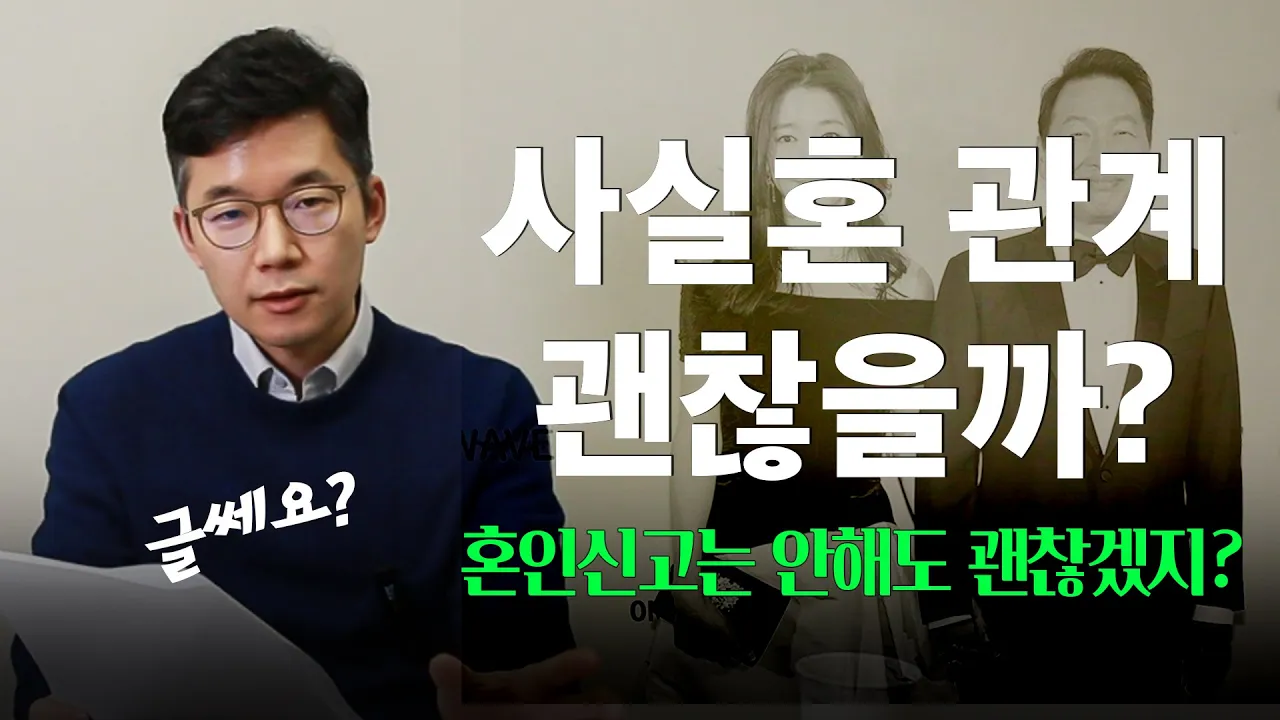
In the column, Attorney Yoon Ji-sang analyzes representative cases in which this principle was applied. Film director Hong Sang-soo was the spouse at fault for engaging in adultery despite having a spouse, and his divorce petition was dismissed because his spouse did not want a divorce. By contrast, in the case of SK Group Chairman Chey Tae-won and Art Center Nabi Director Noh So-young, a divorce ruling was issued because although Chairman Chey was the spouse at fault, Director Noh also expressed her intent to divorce.
The presence of minor children influences divorce decisions
Attorney Yoon also points out trends in lower court practice. When there are minor children, courts scrutinize divorce claims more strictly. On the other hand, if there are no minor children, courts tend to view the divorce lawsuit itself as evidence that the marriage has broken down. It is also analyzed that the presence of minor children likely had a major impact on the dismissal of former footballer Cha Du-ri's divorce claim.
However, Article 840, item 6 of the Civil Act, which refers to 'other grave reasons that make it difficult to continue the marriage,' leaves room for interpretation. If the marital relationship has completely broken down, there is no possibility of reconciliation, and the responsibility for the breakdown is no longer sufficient to bar the divorce claim, then a divorce may be granted as an exception. Knowing where the boundary of that judgment lies is the most important point in practice.
If you are considering divorce
The law tries to strike a balance between protecting the family and preserving individual happiness, but it is difficult to fully reflect the complexity of reality. If you are considering divorce, we recommend first seeking expert legal advice on the scope of the fault principle, issues such as property division and child custody, and the points the court will focus on. That advice can serve as the basis for careful consideration.
"Yoon Ji-sang's Family Law Unboxing" is regularly serialized in Hankyung Law & Biz Law Street by the Korea Economic Daily. Attorney Yoon Ji-sang of JONJAE Law Firm explains the key issues in divorce and inheritance based on practical experience.
Watch the video on JONJAE Law Firm's YouTube 'Family Law Unboxing' channel
Other news


