Civil and Criminal
1. The Client's Crisis
The client (Internal Employee Welfare Funds A and B) invested a total of KRW 4 billion by purchasing derivative-linked securities (DLS) from C Financial Company. The defendant, Company C, described the product as a stable product adopting an "absolute return strategy," but in reality it was a high-risk structure in which principal loss depended on the defendant's asset management results. After losing most of the invested principal and recovering only about KRW 700 million, the client filed a first-instance lawsuit, but the plaintiff lost on part of the claims and retained attorney Park Sang-jin, partner at Law Firm Jonjae, to handle the appeal. The opposing side was represented by Law Firm Bae, Kim & Lee, the largest law firm in Korea.
2. Key Issues
There were three main issues in this case. First, the defendant argued that because the client had experience investing in financial products in the past, it qualified as a 'professional investor' under the Capital Markets Act and therefore sought to avoid the application of investor-protection duties. This is because if the client were classified as a professional investor, core investor-protection rules such as the suitability principle and duty to explain would not apply. Second, although the DLS in this case used the name 'derivative-linked securities,' in substance it was a discretionary management structure in which profits and losses were determined by the defendant's discretionary management, making it a special product entirely different from ordinary derivative-linked securities. Clearly conveying this difference to the court was the key. Third, because the defendant emphasized the investor's own responsibility and sought to minimize liability, it was necessary to argue in a way that reduced the client's share of fault as much as possible.
3. Jonjae's Strategy
Attorney Park Sang-jin, a partner at Jonjae, devised a meticulous strategy ranging from analysis of the financial product structure to the legal principles of the Capital Markets Act.
First, he proved that the client was not a professional investor but an ordinary investor. He carefully argued that Funds A and B were non-profit welfare funds established with approval from the Ministry of Employment and Labor, and that they could not be viewed as 'funds established pursuant to law' under the Enforcement Decree of the Capital Markets Act. He also pointed to the facts that the personnel in charge of investments worked on a rotational basis and lacked specialized financial knowledge, and that the fund management manual explicitly stated the principle of 'stability first.'
Second, he focused on highlighting the special structure of the DLS and the financial company's breach of duty. He presented multiple objective materials showing that the name "absolute return strategy" could mislead ordinary investors into believing the return was guaranteed, and argued that the company's failure to explain the fact that this product had a completely different structure from ordinary derivative-linked securities constituted violations of the former Capital Markets Act's suitability principle (Article 46), duty to explain (Article 47), and prohibition on unfair solicitation (Article 49).
Third, to minimize the client's share of fault, he emphasized the funds' lack of expertise as a welfare fund, the defendant's active misleading conduct, and the fact that the defendant recommended an unsuitable product even after understanding the client's investment profile.
4. Outcome and Recovery
The Seoul High Court largely accepted Attorney Park Sang-jin's arguments and recognized the defendant's tort liability for violating the former Capital Markets Act. Damages were calculated at KRW 3.22 billion (investment amount of KRW 4 billion minus recovered amount of KRW 770 million), and the court found the defendant 70% liable, ordering compensation of KRW 2.259 billion. Statutory interest at 5% per annum and delay damages at 12% per annum were applied, and provisional execution was also permitted. This overturned the portion of the first-instance judgment that had ruled against the plaintiff, resulting in a substantive victory on appeal.
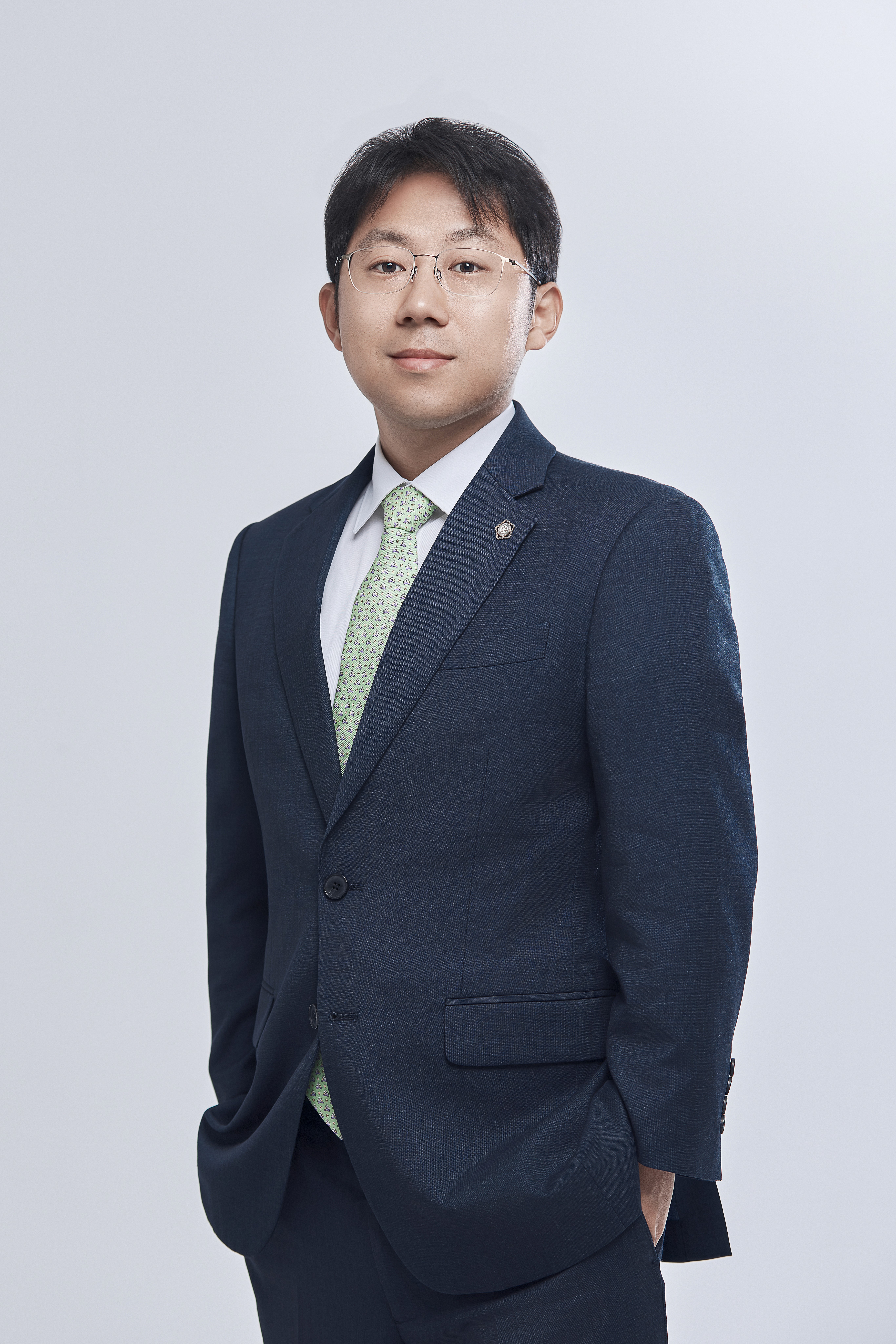
Responsible Attorney: Attorney Park Sang-jin, Partner (47th Judicial Examination, specialized in inheritance, civil, and financial disputes)
To protect confidentiality, this case has been partially anonymized to the extent that it does not undermine the essence of the case.
Attorney in charge
Other cases